
Field Notes·Golf Ball Wisdom·The Caddie Within
The Silent Architecture of Your Swing
The technical faults you see are symptoms. The hidden expectations underneath are the actual diagnosis.

The Silent Architecture of Your Swing
In golf, we often obsess over the mechanics of the grip or the position of the backswing. Yet, the real work happens in the silent space before the club moves. Our intentions are not merely about the target; they are the silent expectations we carry onto the course. When you stand over a pressure-packed putt, the tension you feel is rarely just about the grass or the distance. It is the weight of a goal system: the desire to look competent, the need to avoid the appearance of failure, and the requirement to perform at a specific level.
Hidden objectives operate in the background, guiding your focus without you realizing they are even there.
Just as in business, where the unspoken rules of a project often dictate the outcome more than the strategy document, our golf game is driven by these quiet, internal demands. When we attempt to force an outcome on the course, the body recognizes the urgency and reacts by collapsing the kinetic chain. This is often where we see technical faults, such as a “chicken wing” or rushed tempo — physical symptoms of internal narrative misalignment.

The Executive Mirror
We rarely operate on a blank slate. Most of our day is governed by intentions that live just below the surface. High-performers often exist in a state of constant compression. We assume this state is a requirement of our position, believing that to manage significant responsibility, we must maintain a grip that is perpetually tight.
Consider how these hidden rules shape your daily output:
- They create a hierarchy of goals that filter what you notice in a meeting or a negotiation.
- When an interaction feels frustrating, it is often because these internal standards were blocked by system friction.
- We frequently misattribute our actions to external reasons when the true driver was a deeper, unexamined preference for control.
The next time you find yourself stuck, look for the rule you did not know you were following. You are likely trying to meet an expectation of yourself that is no longer serving the task at hand.
This is the Miss Pattern Frequency — the internal signal created by repeated attention, emotional tone, and self-talk that determines how you reliably lose composure under pressure.

Grip pressure — the first measurable signal.
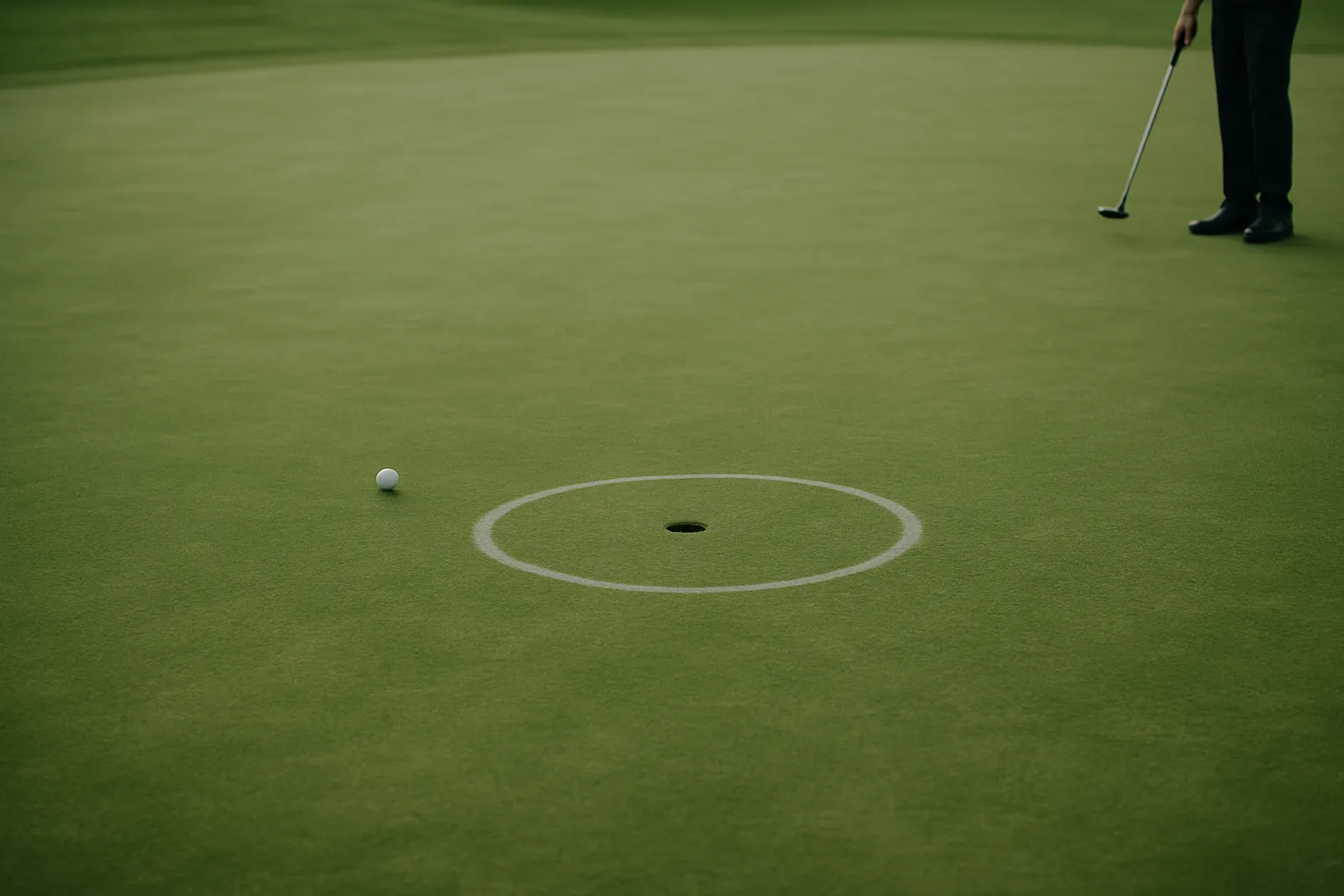
Target lock vs. outcome loop.
Restoring Your Performance Rhythm
To find true mental quiet, we must stop adding information and start observing what is already driving the search. True stillness arrives when the hidden expectations quiet down. Before you return to the range or the boardroom, consider these three principles for operational alignment:
Recognize the narrative: Are you swinging for the result or following through on your process?

By simplifying the physics, we clarify the mind. You do not need more information; you need a clearer performance signal. Release the tension of the outcome, follow through on your process, and let the results follow the quality of your movement.
CaddieWithin · Performance Coaching
If this pattern sounds familiar, it is worth a closer look.
The Miss Pattern Frequency shows up the same way in a boardroom as it does at the first tee. A single diagnostic session maps your internal architecture and gives you a system to work from — on the course and off it.
Book a Diagnostic Session →Or start with the framework: caddiewithin.com