
I got sober in 2012 and slowly learned that most of my suffering came from gripping. The club, the plan, the image of the man I was supposed to be. I call it the mental grip. Golf Ball Wisdom and CaddieWithin are how I share what the golf course taught me. I use golf as a mirror. The work is letting go so your natural swing can move. This is what I am building, what it costs me, and what comes next.
The line I resented for years
Early in my golf career, an assistant pro watched me hit balls on the range.
He didn’t give me a drill. He didn’t fix my takeaway.
He said, “Just swing harder. Nothing bad happens.”
I hated that. I walked away thinking he didn’t get it. I was trying to be careful. I was trying to do it right.
It took me a long time to see what he saw.
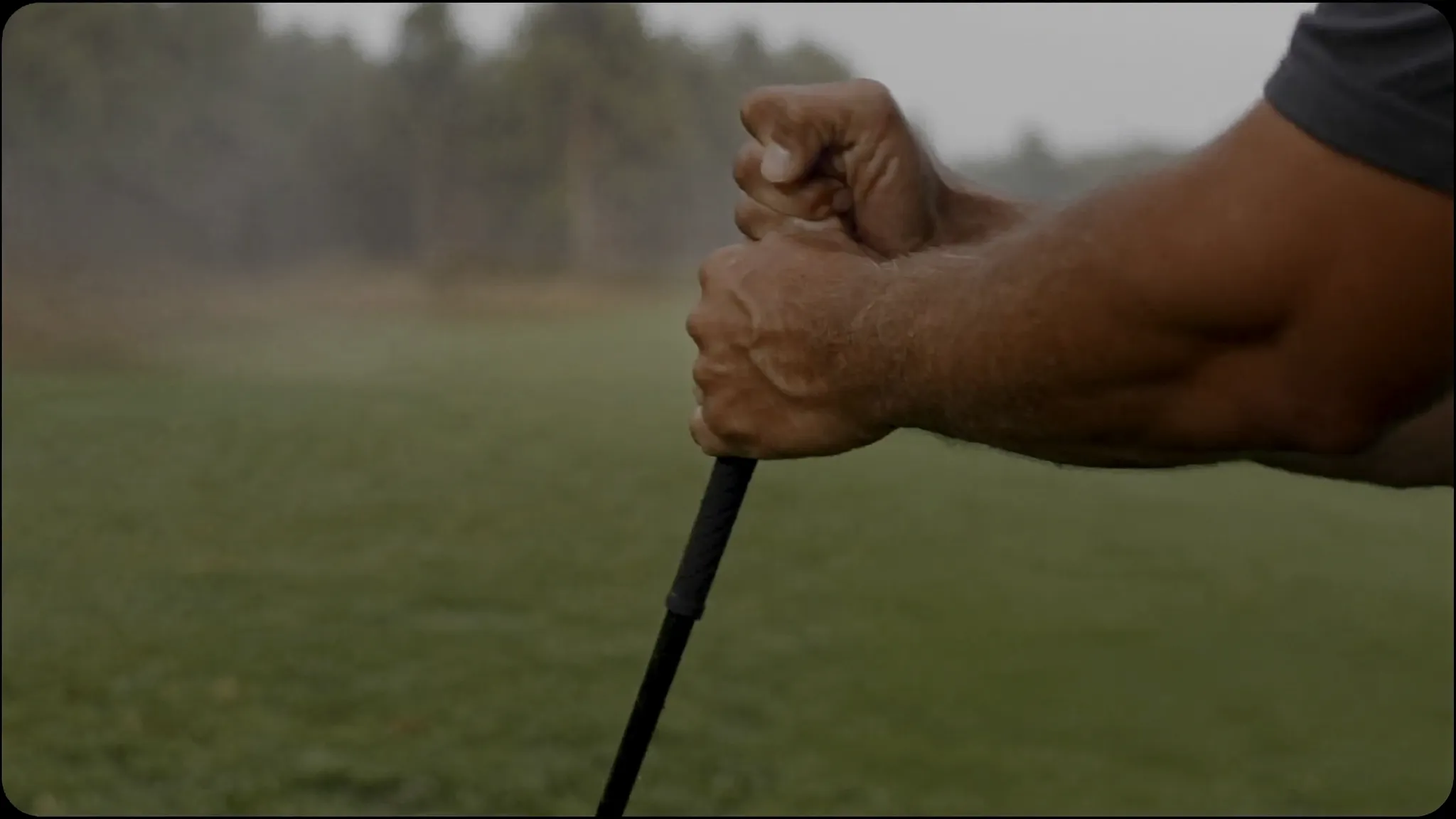
I wasn’t swinging. I was holding on. My hands, my shoulders, my jaw. Every part of me was braced for the bad shot before I ever started the club back.
And it wasn’t only my golf swing. It was my whole life.
The man I used to be
Before 2012, I carried three fears everywhere I went.
That people would find out I was weak. That people would find out I wasn’t smart. That people would find out I was a problem.
Alcohol was how I hid from all three. It was the mask. It let me look fine from the outside while I didn’t have to feel anything on the inside.
In March 2012 I got a DUI. I was 35.
The mask came off, and it didn’t come off gently. I had to take responsibility. I had to actually look at what I had been drinking over.
Looking back, I can name what I did next. Recognize it. Accept it. Move on. I didn’t have those words back then. I was just trying to get through the day without the thing that used to get me through the day.
I don’t celebrate the date. Marking it only brings back the man who drank. He is gone, so I let him stay gone.
What I didn’t see coming was how much of the grip stayed after the drinking stopped.
Sobriety took away the mask. It didn’t take away the bracing. I still walked into hard conversations holding my breath. I still believed that if I loosened my hold on anything, even for a second, the whole thing would fall apart.
The drink was never the whole problem. It was the thing I used so I didn’t have to feel how tight I was holding on. The mental grip was still there. I just couldn’t numb it anymore.
I wrote about those early sober years on the course in how the course became my sanctuary.
What is a mental grip?
A mental grip is the way your mind holds on to control, fear, or an outcome so tightly that your body braces with it. On the golf course it shows up as a tight grip, short breath, and a rushed tempo. Loosening it starts with noticing where you tighten and taking a slow, low breath to tell your body it is safe.
Everyone has one. Most of us have had it so long we think it’s just who we are.
What “golf as a mirror” actually means
Golf as a mirror means the golf course shows you, in your own body, what your mind is doing. When you’re afraid, rushed, or trying to control the outcome, your grip tightens, your breath gets short, and your tempo jumps. When you let go, your breath drops, your shoulders lower, and your swing flows. The ball simply reports which one showed up.
Here is the chain, in plain terms.
Something feels like a threat. A tight fairway. A playing partner you want to impress. A number on the scorecard. Your brain reacts before you’re even aware of it. Chemicals hit. Heart rate goes up. Muscles tighten. Breath gets short and high.
None of that is a story yet. It’s just chemistry and muscle.
Then your mind writes the story on top. Don’t blow this. Everyone’s watching. You always do this.
The one part of that chain you can reach on purpose is your breath. Slow, low breathing tells your body it’s safe. The grip softens. The body remembers how to move.
Everyone’s block is different. Fear, old stories, past hurt. The switch is the same for all of us.
There’s an idea I keep coming back to, one I first found in teachers like Neville Goddard. How you think shapes what happens to you. Most people have to take that on faith. On a golf course, you get to watch it happen in real time, one shot at a time.
Where I learned to see it
I have spent more than twenty years teaching people how to move. My degree is in Human Development from Washington State University. But most of what I know about people, I learned on snow.
For close to twenty years I worked in ski schools at Sugar Bowl, Northstar, and Mt. Rose. I taught kids. I trained instructors. I ran programs.
On a mountain, nobody can hear you over the wind. You learn to teach with your eyes. A scared kid on a steep pitch leans back, locks their knees, and grabs at the air with their hands. A kid who feels safe bends, breathes, and lets the skis run. Same kid. Same slope. Different state.
Year after year, my evaluations said the same thing. I could read people’s bodies. It wasn’t the words I was best at. It was watching. Where the tension shows up first. The hands. The shoulders. The jaw. And the moment it lets go.
Then came golf. Pro shops in California, Arizona, and now North Carolina. These days I also coach a high school girls’ golf team a few afternoons a week. With them it’s mostly mechanics and a lot of joking around. But even there I see it. A player stands over a putt that matters, and her shoulders climb toward her ears. You can work on the stroke all day. The stroke isn’t the only thing standing over that putt.
I have watched it happen on the course. In a men’s group I’m part of, we talked about how overthinking and holding our breath had hijacked our swings. Then we went and hit. The guys who softened didn’t tell me what changed. I didn’t need them to. I could see it. Rhythm came back. The body moved like one piece. The ball went where they were looking.
That’s the whole thing I’m trying to share. It just happens to be easiest to see with a club in your hands. I wrote more about how I read it in The Course Is the Mirror.
The pattern I couldn’t outrun
When I started playing seriously, I didn’t throw clubs. I didn’t yell. I went inward.
One bad shot and I’d get quiet. Grumpy. Hard on myself. I’d replay it for three holes. Then later, driving home, I’d see it clearly. That shot wasn’t a big deal. Why did I let it eat my whole round?
Overreact. Then reflect. Over and over.
There was no single moment where I noticed. It showed up on the course so many times that I couldn’t pretend anymore. Same pattern. Different hole. Different day.
Then I watched another guy do it. Same tight shoulders after a bad shot. Same silence. Same walk to the next tee with his head down, writing the story in his head. I knew exactly what was going on inside him.
That was the first time I thought my story might be useful to someone else. Not because I had it figured out. Because I wasn’t the only one.
I don’t bring a bad round home anymore. That took years. It didn’t come from trying harder. It came from noticing sooner.
What I am building
There are two names, but it’s one idea.
Golf Ball Wisdom is the home for the ideas. My memoir, Carry Less. These Field Notes. A small Pro Shop with gear that works as a quiet reminder.
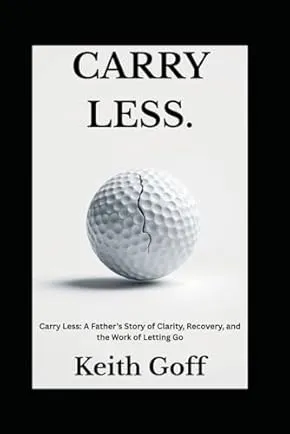
Carry Less by Keith Goff
A memoir about fatherhood, failure, and finding steadier ground. The first book in the series.
CaddieWithin is where the work happens on the grass. Rounds in the Sandhills where we play, pay attention, and name what’s gripping you so you can set it down.
It is not swing instruction. I’m not going to rebuild your takeaway. I’m going to help you notice what you carry to the first tee, and what it costs you.
The part that hurts
I want to be straight about this, because it’s the same thing I’d ask of you.
I built this backwards.
Golf Ball Wisdom started as golf training gear. Then apparel. Then a men’s golf league. Then coaching. The story, the thing that actually connects all of it, came last. I spent years building rooms before I built the door.
When Carry Less came out, it barely sold. I’d love to blame the market. The truth is I didn’t market it. I wrote the book and then I got quiet.
I post things and hear nothing back. I work full days at the golf course and build this before and after. Some weeks that’s a lot of effort going out into a lot of silence.
There’s a pattern I’ve had to face. The question is this even worth it? shows up early. It shows up before any results have a chance to come in. For most of my life, that question was where I quit. I called it being realistic. It was fear. Fear of failing. Fear of being seen as a fraud. Fear of being judged for the man I used to be.
I’m asking men to look at their limiting beliefs while I’m still looking at mine. Some days that feels like the most honest thing I could do. Some days it feels like impostor syndrome with a website.
I also know how I work. I go in bursts. I try to build everything at once. Then a new idea shows up, shinier than the last one, and I chase it. When I can’t see progress, the effort slips away from me.
The two things that keep me going are simple. Someone books a round. Or someone reads something I wrote and it lands.
So I’m writing this one out in the open. If it lands for you, tell me. Send a message to @caddiewithin on Instagram. That isn’t a pitch. It’s how I keep swinging.
I’m doing it anyway. Not harder. Just without the brace.
The rulebook we were handed
A lot of us were handed a life before we were old enough to choose one. Labels and standards that were in place long before we could think about them. Nobody wrote them down, but most men I know could recite them.
- Handle it yourself.
- Don’t show weakness.
- Your work is your worth.
- Always win.
- Provide no matter the cost.
- Stay in control.
- Feelings are for later.
- Look successful.
- Never quit.
- Take the edge off.
Every one of those is a mental grip. Every one of them shows up on the golf course if you know where to look.
Handle it yourself is the guy who won’t ask his partner to help read a putt.
Always win is the guy who can’t enjoy a good round because it wasn’t a great one.
Look successful is the guy who buys a new driver instead of asking why the old one keeps going right.
Stay in control is the white-knuckle grip in the first picture on this page.
Take the edge off is the drink cart coming around on the back nine. I know that one best.
I lived by most of them. The last one cost me the most.
What a good day looks like now
For a long time I measured a good day by how it went. Did the work get done. Did people respond the way I hoped. Did the round go well.
That put my whole day in somebody else’s hands.
This is how I define it now. I say it to myself when I need it:
A bad day for me isn’t a bad score or a slow week. It’s when I spiral into the story about what it all means about me. You can feel it in your body. Heavy. Tight. Short breath.
On a good day, nothing in my body stands out. The work just moves.
That’s what I’m chasing on the golf course too. Not a perfect round. A round where I didn’t build a story on top of every shot. I wrote more about that in the power of letting go.
How to loosen your mental grip on your next round
You don’t need me to start. This is the simple version of the card I carry, the CaddieWithin Field Note. Four steps. G-O-A-L.
- Gratitude. Before the first tee, name one thing you’re glad about. Not golf. Something real. It pulls you out of threat and into where you are.
- Objective. Pick one intention for the round that has nothing to do with your score. Breathe before every shot. Walk a little slower. Keep it small.
- Assessment. After a shot that bugs you, notice before you judge. Where did you tighten? Hands, shoulders, jaw? Was your breath high or low? Just notice. No verdict.
- Let Go. Take one slow breath, low into your belly, and let the shot be over. Set it down before you walk to the next one.
Don’t go looking for a better score. Watch what else changes. The walk between shots. Your jaw. How long a bad hole follows you.
This isn’t swing instruction and it isn’t therapy. It’s a way to notice. If what you notice is heavier than a round of golf can hold, talk to someone you trust.
What’s coming
Swing Clean, book two
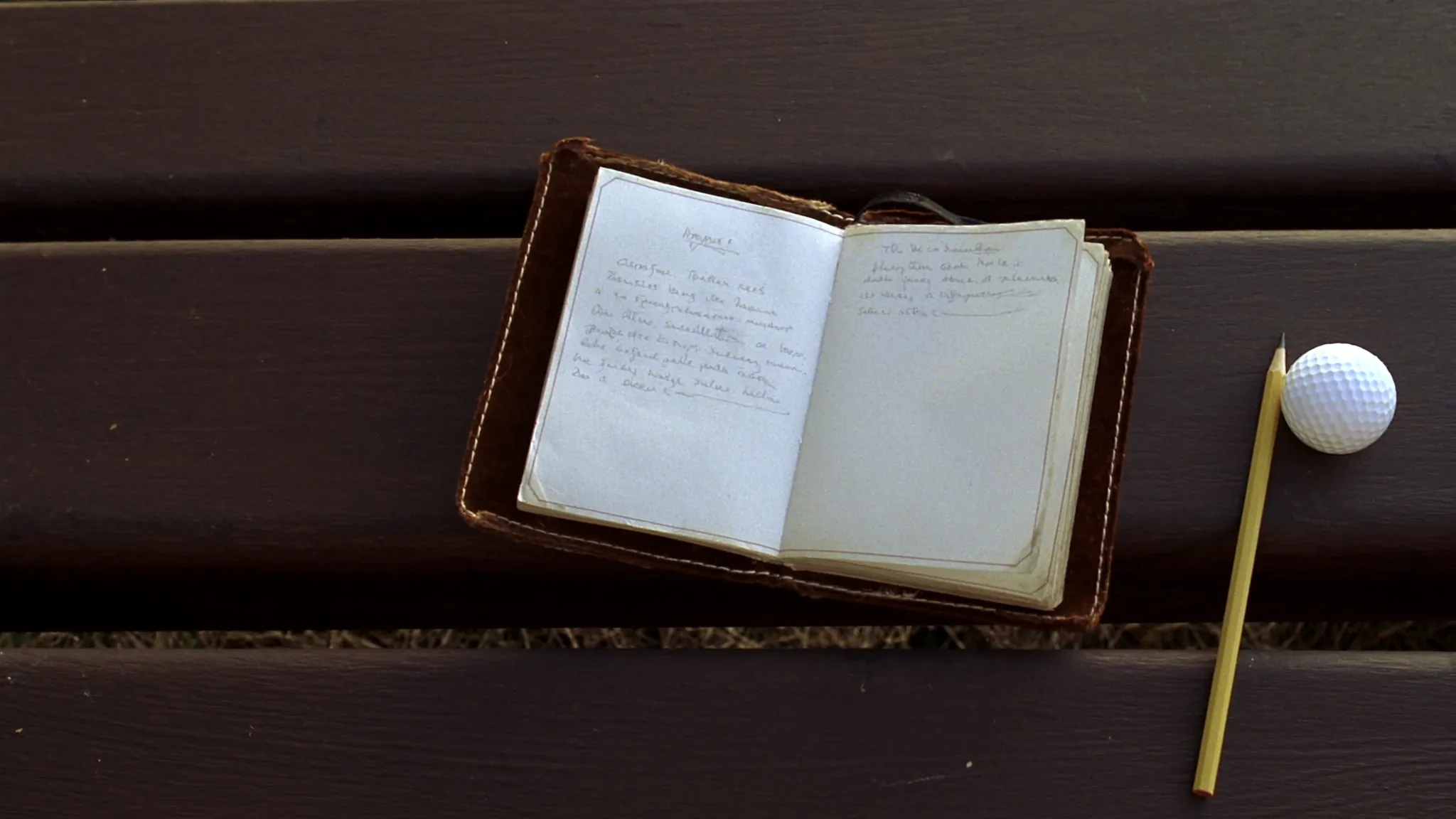
Carry Less ends with three words: carry less, swing clean, walk steady. Swing Clean is the second book in that series. It’s built from my own journal entries, printed raw, with what I see now written after each one. No lessons handed to you. Just the work I did on myself, with golf as the mirror.
A Field Notes series on the rulebook
One rule at a time, starting with handle it yourself, because that’s the one I’m still breaking. Where it came from, what it does to your body, and what letting go of it looks like on the course.
The Field Note, on paper
The G-O-A-L card above is the one I use in rounds. I plan to share a version you can print and keep in your bag.
More rounds on the grass
Three holes, nine holes, a monthly membership for locals, and an 18-hole day for visiting golfers. All in the North Carolina Sandhills.
Where to start
Wherever you are is fine. Pick one.
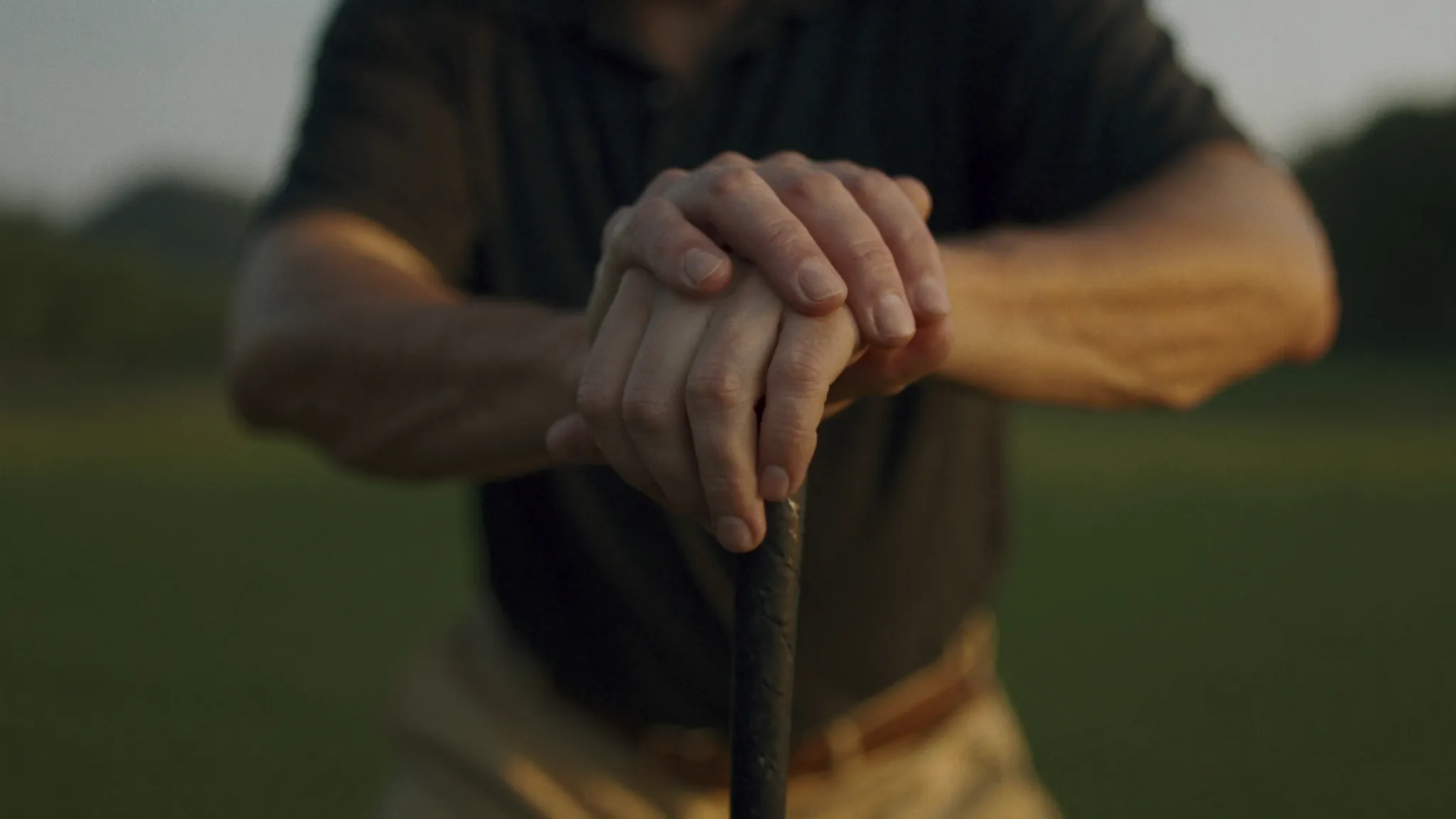
So I’ll leave you with this. What are you gripping right now that you’ve started calling normal?
Questions people ask me
What is CaddieWithin?
CaddieWithin is a human development coaching practice in the North Carolina Sandhills, founded by Keith Goff. It uses rounds of golf as a mirror to show how you handle pressure, control, and fear, then helps you let go of the mental grip so you can move and decide more freely, on the course and off it.
Is CaddieWithin golf lessons?
No. CaddieWithin is not swing instruction. The golf course is used to reveal what you carry into pressure. Better shots often follow when the grip softens, but the swing is not the subject.
What does “golf as a mirror” mean?
It means the golf course shows you, in your own body, what your mind is doing. Fear and control show up as a tight grip, short breath, and a rushed tempo. Letting go shows up as slow breath, loose shoulders, and a flowing swing.
What is a mental grip?
A mental grip is the way your mind holds on to control, fear, or an outcome so tightly that your body braces with it. On the golf course it shows up as a tight grip, short breath, and a rushed tempo. Loosening it starts with noticing where you tighten and taking a slow, low breath to tell your body it is safe.
How do I loosen my mental grip on the golf course?
Use the four steps of the CaddieWithin Field Note, G-O-A-L. Gratitude before the round, one Objective that isn’t about score, an honest Assessment of where you tightened after a frustrating shot, and a slow breath to Let Go before the next one.
What is the book Carry Less about?
Carry Less is a memoir by Keith Goff about fatherhood, failure, and finding steadier ground, with golf as the mirror. It is the first book in a series that continues with Swing Clean.
What is the difference between Golf Ball Wisdom and CaddieWithin?
Golf Ball Wisdom is the home for the ideas: the Carry Less books, Field Notes, and the Pro Shop. CaddieWithin is the coaching practice where that philosophy is put to work on the golf course.